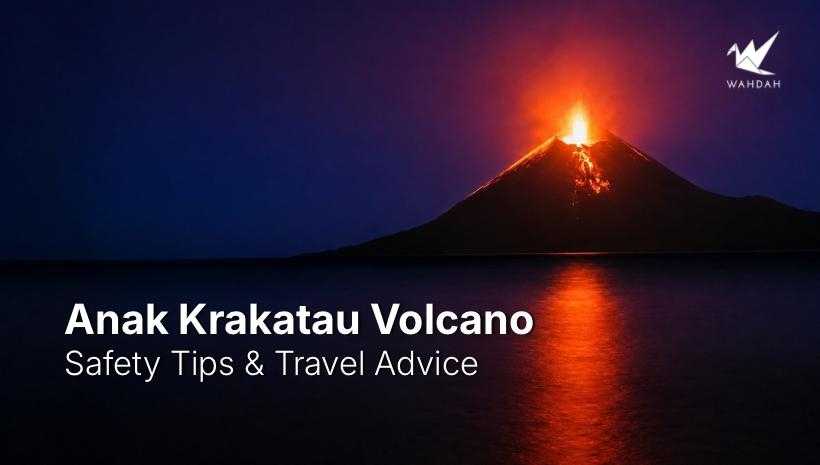
Mount Anak Krakatau, the active volcano in the Sunda Strait between Java and Sumatra, entered a major eruption phase late on Friday, 4 September 2026, with continuous Strombolian activity and lava fountaining into Sunday. The volcano has been at Level III (Alert/Siaga) status since 2 July 2026, and authorities maintain a strict 3‑kilometre exclusion zone around the crater.
This guide provides the latest information as of 7 September 2026 on the Mount Anak Krakatau eruption 2026 and practical advice on how to stay safe while traveling in Indonesia.
What Is Happening with the Mount Anak Krakatau Eruption 2026?
The current eruption episode began late on 4 September 2026 at 23:07 WIB and continued for around 25 hours, ending early on 6 September 2026 at 00:04 WIB. After this intense phase, activity returned to typical Strombolian eruptions, which remain under close monitoring.
Key Facts About the Current Eruption
-
Volcanic Status:
Anak Krakatau remains at Level III (Siaga/Alert), the third-highest alert level in Indonesia’s volcano warning system. This status has been in place since 2 July 2026. PVMBG (Center for Volcanology and Geological Hazard Mitigation) continues to monitor seismicity, deformation, and emissions. -
Eruption Activity:
The 4–6 September episode featured continuous lava-fountain (Strombolian) activity and incandescent flows visible from nearby coastal areas. As of 7 September, the continuous eruption has ended, but the volcano remains active with ongoing Strombolian events and elevated seismicity. -
Tsunami Concerns:
PVMBG and BNPB (National Disaster Management Agency) have stated that the current eruption scenario does not pose a tsunami threat. The post‑2018 cone is relatively small and not considered capable of a collapse large enough to generate a tsunami under present conditions. -
Exclusion Zone and Maritime Restrictions:
A 3‑kilometre radius around the crater is off-limits to residents, tourists, climbers, and vessels. Port and shipping authorities have tightened controls in the Sunda Strait to keep boats and ships outside this zone.
Health and Safety Tips During the Mount Anak Krakatau Eruption 2026
1. Wear a Mask When Outdoors
Volcanic ash contains fine particles that can irritate and damage your lungs. Masks reduce inhalation of ash, especially respirators.
What to do:
-
Wear a medical mask, N95/FFP2 respirator, or well-fitted cloth mask when outdoors.
-
Replace your mask if it becomes damp, dirty, or hard to breathe through.
-
Avoid outdoor activities when ashfall is heavy, especially if you have asthma or other respiratory conditions.
Why it matters:
Masks reduce exposure to fine ash particles and help protect your respiratory system, though they do not filter out all particles unless properly fitted.
2. Protect Your Eyes with Goggles or Glasses
Ash particles can irritate and scratch your eyes.
What to do:
-
Wear goggles, safety glasses, or regular glasses when outdoors in ash-affected areas.
-
If ash gets in your eyes, rinse with clean water; do not rub.
-
Avoid wearing contact lenses in dusty conditions.
Why it matters:
Eye protection prevents irritation, redness, and potential corneal injury from ash particles.
3. Keep Your Home Well-Ventilated and Clean
Ash can enter homes through doors, windows, and ventilation.
What to do:
-
Close windows and doors during heavy ashfall.
-
Seal gaps with damp towels to reduce ash ingress.
-
Clean indoor surfaces with wet cloths or mops; avoid dry sweeping, which re-suspends ash.
-
Place doormats at entrances and remove shoes before entering.
-
Change air conditioner and air purifier filters regularly.
Why it matters:
A cleaner indoor environment reduces the amount of ash you breathe in and helps maintain better air quality.
4. Stay Hydrated and Drink Clean Water
Ashfall can affect water quality and irritate your throat and airways.
What to do:
-
Drink plenty of clean, filtered, or bottled water.
-
Cover food and drinking water to prevent ash contamination.
-
Wash fruits and vegetables thoroughly before eating.
-
If you have respiratory conditions, stay extra hydrated to soothe your throat and airways.
Why it matters:
Proper hydration supports your body’s natural defenses against respiratory irritation and helps clear inhaled particles.
5. Limit Outdoor Activities
Reducing time outside is one of the most effective ways to limit ash exposure.
What to do:
-
Stay indoors as much as possible, especially during heavy ashfall.
-
If you must go out, wear a mask, protective eyewear, and cover exposed skin.
-
Avoid strenuous outdoor activities that increase your breathing rate.
-
Follow official advice from local authorities, especially for schools and outdoor events.
Why it matters:
Less time outside means less exposure to harmful ash particles and lower risk of respiratory issues.
What to Avoid
-
Do not approach the volcano:
Stay outside the 3‑kilometre danger zone around the crater. This applies to land and sea. -
Do not panic:
The situation is being actively managed by PVMBG, BMKG, BNPB/BPBD, and local governments. There is no current tsunami threat based on official assessments. -
Do not believe unverified reports:
Rely on official information from BMKG, PVMBG, BNPB/BPBD, airlines, and local government announcements.
Mount Anak Krakatau Eruption 2026: FAQ
Is there a tsunami risk from Mount Anak Krakatau?
No current tsunami threat has been identified. PVMBG, cited by BNPB and multiple media outlets, has confirmed that the post‑2018 edifice is relatively small and not considered capable of a collapse large enough to generate a tsunami under current conditions.
What is the 3‑kilometre exclusion zone?
Authorities have prohibited public access within a 3‑kilometre radius of the active crater. This applies to residents, tourists, climbers, and ships. Maritime authorities have tightened controls in the Sunda Strait to enforce this restriction.
How can I protect myself from volcanic ash?
-
Wear medical masks or N95/FFP2 respirators outdoors.
-
Limit outdoor activities, especially during heavy ashfall.
-
Cover food and drinks, close windows and doors, and use wet methods to clean ash indoors.
-
Do not rub your eyes if ash gets in them; rinse with clean water instead.
Where can I find official updates?
Follow official channels:
-
BMKG (Meteorology, Climatology, and Geophysics Agency) – ash dispersion and weather impacts.
-
PVMBG / Badan Geologi (via Magma Indonesia) – volcano status, alerts, and technical bulletins.
-
BNPB / BPBD (National and Regional Disaster Management Agencies) – safety advisories and local response.
-
Ministry of Transportation, AirNav Indonesia, and airlines – airport closures, NOTAMs, and flight status.
Travel Safely in Indonesia
If you are planning to travel in Indonesia during this period, having reliable transport is essential. WAHDAH offers well-maintained vehicles with unlimited mileage, flexible pickup and drop-off, and customer support.
Your safety and comfort matter.
Book your WAHDAH ride now and travel with confidence.
Stay informed, follow official guidance, and prioritize your health and safety. If you are in affected areas, take precautions against volcanic ash and keep checking for updates from authorities.






 English
 Singapore
 Bahasa Malaysia
 Indonesia